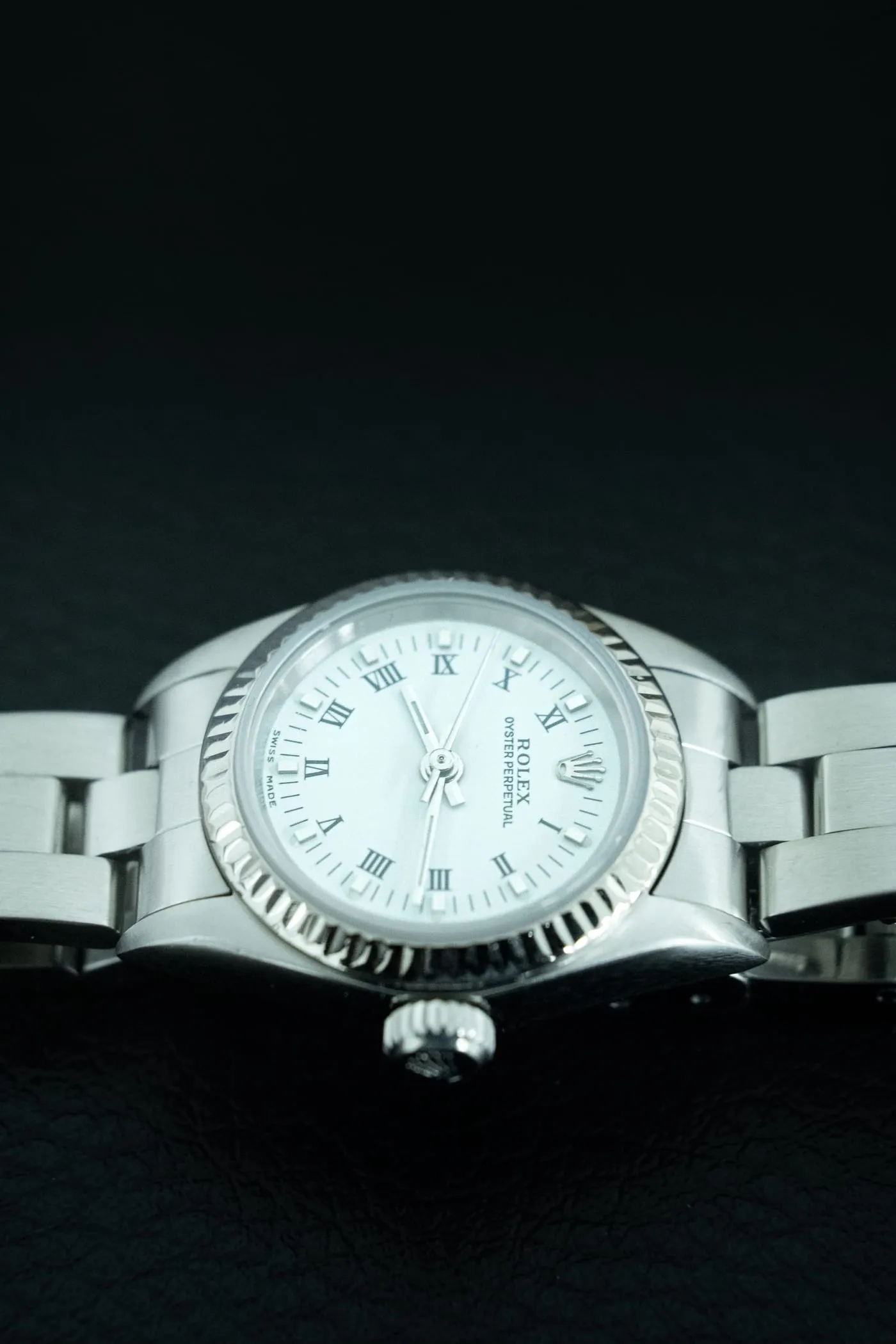
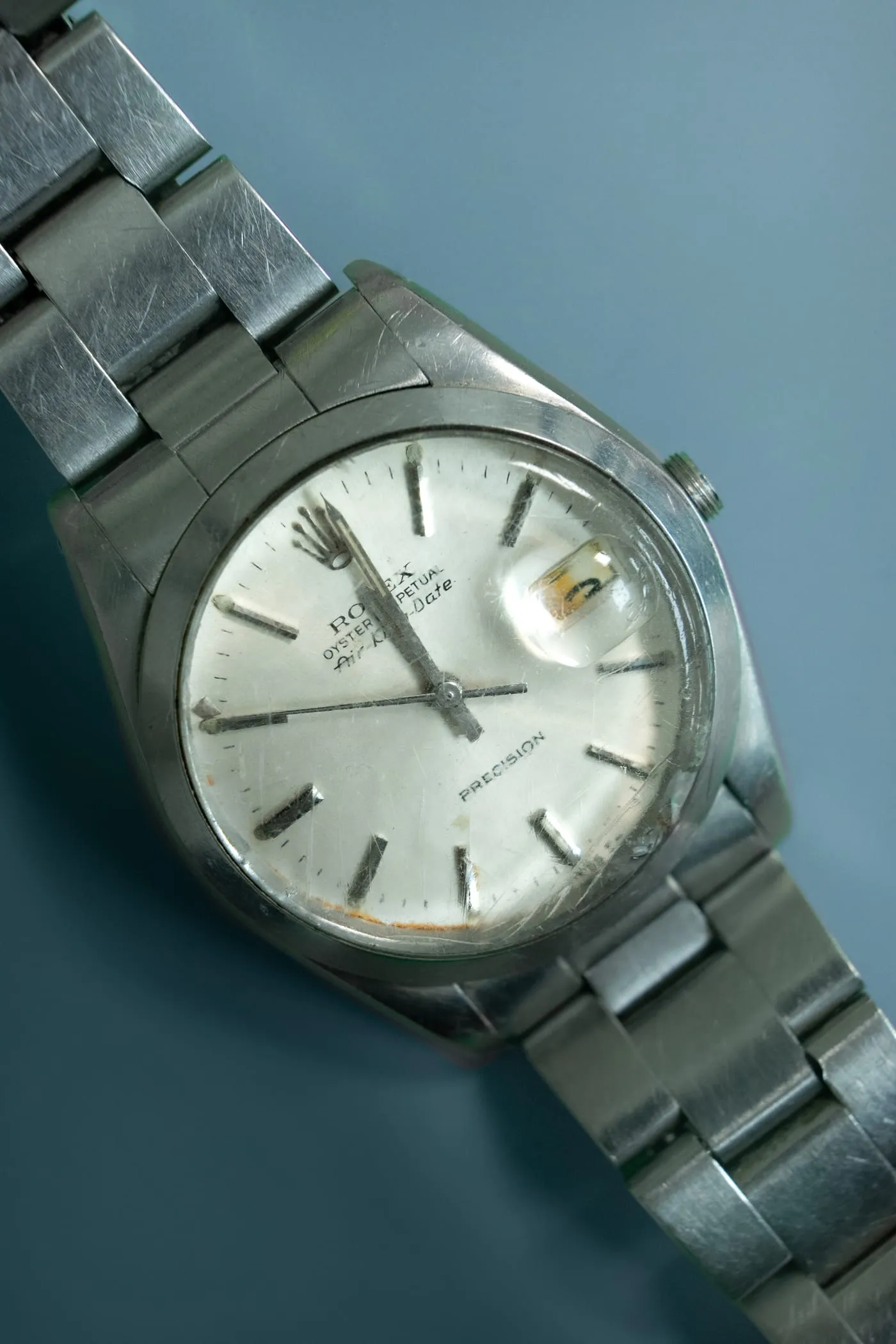
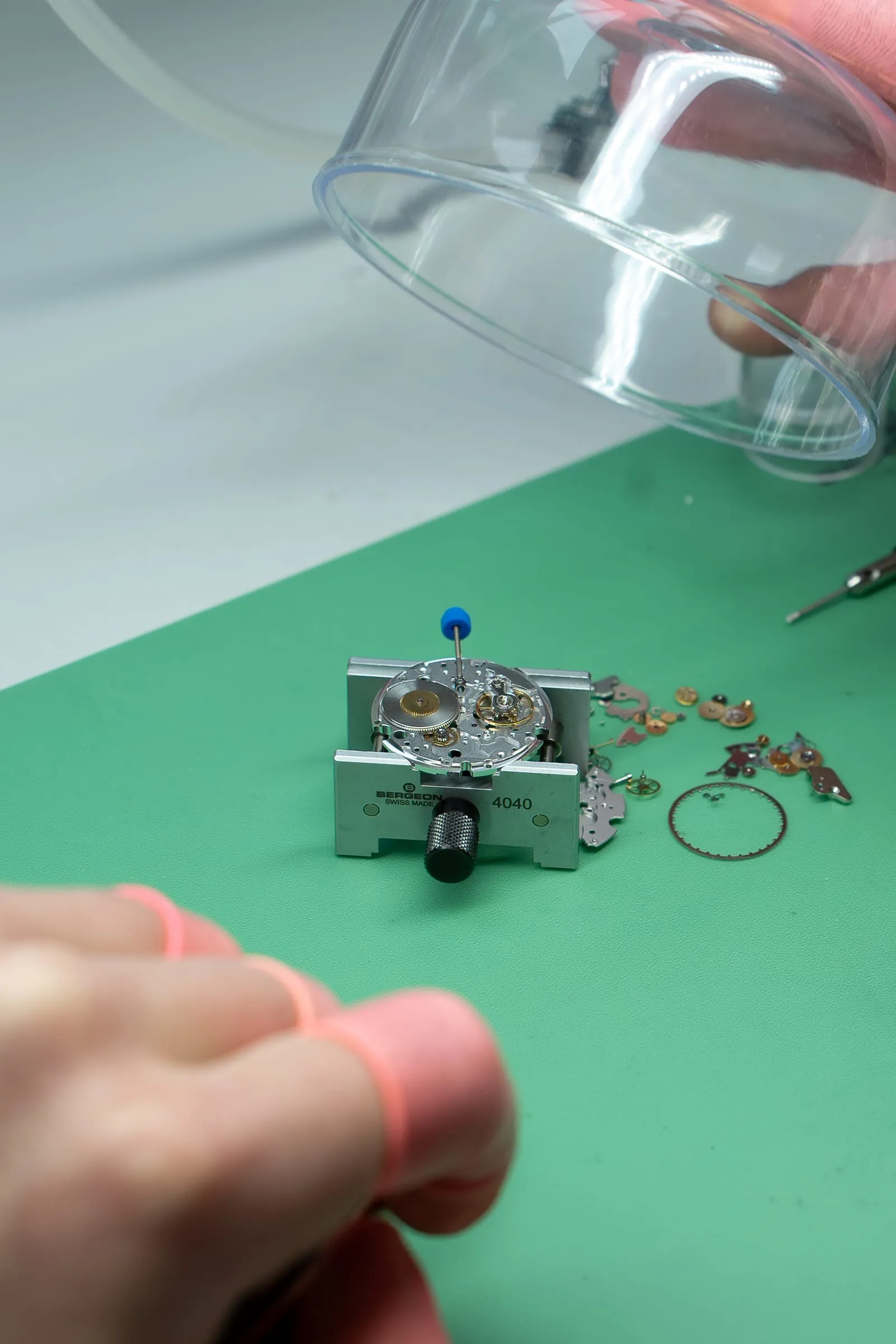
Rolex vs Omega: A Watchmaker's View

TL;DR: Both brands make watches that will outlive their owners if serviced properly. Rolex movements are engineered for robustness and serviceability. The architecture is simpler, the parts quality exceptional, and the calibres forgive neglect. Omega’s Co-Axial movements are more technically ambitious, with better accuracy specs and market-leading magnetic resistance, but they are less tolerant of skipped services. On cost of ownership over a decade, Omega is cheaper to buy and slightly cheaper to service. Rolex recovers more at resale. There is no wrong answer, but there is a right answer for how you’ll actually use the watch.
Search “Rolex vs Omega” and you’ll find a dozen comparisons written by dealers. They’ll tell you about heritage, waiting lists, price points and resale values, and they’re broadly right on all of it.
What none of them can tell you is what these watches look like from the inside, because none of them service the watches they sell.
We do. SwissMade has been servicing luxury watches in Hatton Garden since 1985. We’re an Omega-accredited service centre at Level 3, the highest tier Omega awards, and a specialist independent for Rolex, with over 75,000 timepieces through our workshop across both brands.
This comparison is the one we give customers who ask us directly: not which watch to buy, but which watch holds up. Mechanically, financially, and across decades of ownership.
Why This Comparison Is Different
A dealer’s comparison ends at the point of sale. A watchmaker’s comparison starts there.
Over a 30-year ownership period, the purchase price of a luxury watch is only part of the story. The rest is what it costs to keep running, how it tolerates the way you actually treat it, how easily parts can be sourced in 2046, and what a well-documented service history does to its value when you or your children eventually sell it.
Those are workshop questions, and they produce a very different comparison from the showroom version.
One note on scope: we’re comparing the modern mainstream of both catalogues. That means Rolex’s Oyster Perpetual family (Submariner, Datejust, GMT, Explorer, Daytona) against Omega’s Master Chronometer generation (Seamaster, Speedmaster, Aqua Terra, De Ville). Vintage is covered separately below.
The Movements: What We See Inside
Rolex builds movements the way engineers build bridges: conservatively, with enormous margins.
The current 32xx-series calibres (and the 31xx series before them) are architecturally simple by high-horology standards.
A full balance bridge rather than a balance cock, large robust components, the paramagnetic blue Parachrom hairspring, and finishing that prioritises function over decoration. You will never see the movement through a Rolex case-back, and that’s a philosophical choice. The movement is a machine, not an ornament.
At the bench, the practical consequences are consistent. Rolex movements come apart predictably, tolerate wear gracefully, and rarely surprise us. When a 20-year-old 3135 comes in having missed two service windows, it usually needs exactly what you’d expect.
A mainspring, gaskets, lubrication, perhaps a reversing wheel, and nothing else.
Omega’s Co-Axial calibres (8500, 8800, 9300 and successors) are more ambitious machines.
The Co-Axial escapement, developed from George Daniels’ design, reduces sliding friction at the escapement, which is the single highest-wear interface in a mechanical watch. Combined with the silicon Si14 hairspring, the modern calibres achieve METAS Master Chronometer certification: accuracy of 0/+5 seconds per day after casing, and magnetic resistance to 15,000 gauss, the best in the industry at this price point.
METAS, the Swiss Federal Institute of Metrology, independently certifies every watch.
The trade-off we see on the bench: Co-Axial escapements are less forgiving of extended service neglect than Rolex’s lever escapement. The Co-Axial’s advantage assumes correct lubrication.
When the oils degrade past a certain point, wear at the escapement accelerates in a way a conventional lever escapement doesn’t. An Omega serviced on schedule is a superb machine. An Omega that’s skipped ten years of servicing usually needs more parts than an equivalent Rolex would.
Reliability and How Each Brand Ages
Both brands sit in the top tier of the industry for reliability. The differences are at the margins, but they’re real.
Rolex ages like a Land Rover. The watches tolerate owner neglect better than almost anything we see.
Twenty-year service gaps, decades of daily wear, sea water, golf swings. The movements usually survive it all and come back to specification after a single thorough service.
This robustness is the most under-reported fact in the Rolex vs Omega debate, and it’s the main reason vintage Rolex is such a strong market. The watches survive.
Omega ages like a precision instrument. Serviced on schedule, a modern Omega runs to tighter accuracy specifications than an equivalent Rolex, resists magnetism better (a useful trait in a world of laptop lids and phone speakers), and shows less timekeeping drift between services.
The caveat is that the service schedule matters more. Our advice to Omega owners is firmer than our advice to Rolex owners: don’t stretch the interval.
On water resistance, both are excellent when maintained. Gaskets are consumables on both brands, and the failure mode (worn crown seals) is identical. Neither brand wins here. The service schedule does.
Accuracy: Chronometer Standards Compared
Both brands exceed the standard COSC chronometer certification (-4/+6 seconds per day), but they exceed it differently:
| Rolex | Omega (Master Chronometer) | |
|---|---|---|
| Certification | COSC + Rolex in-house “Superlative Chronometer” | COSC + METAS Master Chronometer |
| Stated accuracy | -2/+2 sec/day after casing | 0/+5 sec/day after casing |
| Magnetic resistance | Not formally rated (Parachrom hairspring is paramagnetic) | Certified to 15,000 gauss |
| Testing | In-house | Independent (METAS) |
On paper, Rolex’s -2/+2 is the tighter band. In practice, both are exceptional and both routinely beat their own specs when fresh from service.
The watches we regulate typically leave the workshop inside ±2 seconds per day regardless of brand. The meaningful difference is magnetic resistance, where Omega’s certified 15,000 gauss goes well beyond anything Rolex formally claims.
If your watch lives near strong magnets, whether that’s audio equipment, medical settings or engineering environments, Omega has a real advantage rather than a marketing one.
Servicing: Cost, Intervals and Parts Compared
This is our home ground, and it’s the section missing from every dealer comparison.
| Rolex | Omega | |
|---|---|---|
| Recommended full-service interval | ~10 years (manufacturer); we suggest 5–7 for daily wear | 5–8 years (manufacturer) |
| Full service at SwissMade | from £675 (three-hand) | from £400 (three-hand) |
| Full service brand-direct | £900+ | £650+ (mechanical, non-chrono) |
| Typical turnaround (SwissMade) | 8–12 weeks | 8–12 weeks |
| Typical turnaround (brand-direct) | 20–30 weeks | 8–14 weeks |
| Parts availability | Excellent, but informal for independents (Rolex doesn’t authorise UK third parties) | Excellent and formal. Accredited centres order directly. |
| Vintage parts (30+ years) | Good via trade channels; Rolex’s own centres often decline watches over ~35 years | Good. Omega supports older calibres well and accredited centres can access archive parts. |
Three practical observations from those numbers.
Omega is cheaper to keep. Across a 30-year ownership period with services on schedule, an Omega owner will typically spend 25–35% less on servicing than a Rolex owner. The per-service price is lower and the parts pricing is gentler.
Rolex’s longer stated interval flatters its cost. Rolex’s ten-year guidance narrows the lifetime cost gap on paper, but our bench experience says daily-worn watches of both brands do better on a 5–7 year cycle. Oils don’t read brochures.
The servicing route matters more for Rolex. Because Rolex doesn’t accredit UK independents, Rolex owners face the sharpest fork: 20–30 weeks and £900+ brand-direct, or 8–12 weeks and from £675 with a specialist independent.
Omega owners have a smoother middle path, because accredited centres like ours do manufacturer-standard work with formally sourced genuine parts.
We’ve covered the full decision in our guide to official vs independent watch repair in London, and the detailed numbers in our Rolex service cost guide and Omega service cost guide.
Longevity and Vintage Prospects: Which Survives Decades Better?
Ask which brand’s watches are still on wrists 50 years after manufacture, and the answer is both, in enormous numbers.
We regularly service 1960s Seamasters and 1970s Datejusts, and both restore beautifully. But the vintage experience differs.
Vintage Rolex is the easier long-term proposition mechanically. The calibres changed slowly and conservatively, parts interchange across long production runs, and the trade parts network is deep because the collector market is so large.
The complication is political rather than mechanical: Rolex’s own service centres frequently decline watches over around 35 years old, so vintage Rolex servicing lives almost entirely with independents.
That’s why choosing a specialist with vintage experience matters, and we’ve written more on this in is it worth servicing a vintage Rolex.
Vintage Omega is the better-value entry into serious vintage watchmaking, and Omega as a manufacturer supports its back catalogue well.
Calibres like the 550-series automatics and the 861 Speedmaster movement are superbly engineered and thoroughly documented.
The caveat is variety. Omega produced far more calibre families than Rolex, so parts for some less common movements take longer to source. Our guide to servicing a vintage Omega covers the specifics.
Verdict from the bench: a 50-year horizon slightly favours Rolex for mechanical simplicity and parts depth. Omega counters with better manufacturer support for older calibres. Both are safe multi-generational watches.
Resale Value: The Honest Numbers
We’re watchmakers, not dealers, so we’ll keep this brief and defer to the market data:
Rolex wins resale, clearly. Steel sports Rolex models regularly sell at or above retail on the secondary market. Omega models typically trade at a discount to retail, with the Speedmaster Professional the notable strong performer.
If capital preservation is a primary criterion, Rolex is the answer and no honest comparison says otherwise.
Two workshop-side footnotes the dealer comparisons miss.
Service history moves resale value on both brands. A documented service history from the manufacturer or a reputable specialist adds real value at sale, and an undocumented watch with aftermarket parts inside loses more than the cost of the services it skipped. The cheapest service is rarely the best-value one.
Unpolished cases are worth more. On both brands, collectors pay premiums for unpolished or lightly polished cases. If resale matters to you, decline cosmetic refinishing at service. We’ll always ask rather than assume.
So Which Is “Better”? A Watchmaker’s Answer
After 40 years with both brands on the bench, here’s where we land.
Choose Rolex if you want the most robust mechanical watch made at scale, you’re undisciplined about servicing, resale value matters to you, or you want a watch that will pass to the next generation with the least mechanical drama.
Choose Omega if you want the better technical specification for less money, you work or live around magnetic fields, you’ll service the watch on schedule, or the heritage speaks to you. No Rolex has been to the Moon.
Neither is a mistake. We say that as a workshop that profits equally from servicing both. The mistake we do see, weekly, is choosing either brand and then skipping the servicing that keeps this comparison academic. A neglected Rolex will eventually lose to a maintained Omega, and vice versa. The best watch is the one that’s looked after.
If your Rolex or Omega is due some attention, we service both to manufacturer standard at our Hatton Garden workshop, as an Omega Level 3 accredited centre and a Rolex specialist independent. Genuine parts, a free written estimate, and a 2-year warranty on full services. Start at swissmade.co.uk or call 020 7405 8504.
Frequently Asked Questions
Does Rolex hold value better than Omega?
Yes, clearly. Steel sports Rolex models regularly trade at or above retail on the secondary market, while most Omega models trade below retail, with the Speedmaster Professional the strongest Omega performer. If resale value is a primary criterion, Rolex is the answer. Service history and unpolished condition move resale value on both brands.
Which is more accurate, Rolex or Omega?
On paper, Rolex. Its Superlative Chronometer standard is -2/+2 seconds per day against Omega’s METAS-certified 0/+5. In practice both are exceptional, and freshly serviced examples of either brand typically run inside ±2 seconds per day. Omega’s certified 15,000-gauss magnetic resistance is the more meaningful technical advantage in daily life.
Which costs more to service, a Rolex or an Omega?
Rolex. A Rolex full service starts from around £675 at a specialist independent and £900+ brand-direct, against £400 and £650+ respectively for a three-hand Omega. Over a multi-decade ownership period, Omega servicing typically costs 25–35% less. Rolex’s longer stated service interval narrows the gap on paper, but daily-worn watches of both brands benefit from a 5–7 year cycle.
Which lasts longer, a Rolex or an Omega?
Both last indefinitely with proper servicing. We regularly service watches from both brands that are 50+ years old. Rolex movements tolerate neglect better and have deeper vintage parts availability. Omega supports its older calibres well and its modern Co-Axial movements wear exceptionally when serviced on schedule. The service history matters more than the brand.
Why did NASA choose Omega over Rolex?
In 1964–65, NASA tested chronographs from several manufacturers for manned spaceflight, subjecting them to extreme temperature, vacuum, humidity, shock and vibration. The Omega Speedmaster was the only watch to pass every test, and it was flight-qualified in 1965. It became the first watch worn on the Moon in 1969 and remains flight-qualified for spacewalks today.
Is Omega as luxurious as Rolex?
By most objective measures (movement finishing, materials, certification standards) the brands are peers, and Omega’s technical specifications exceed Rolex’s in several areas. Rolex carries greater brand prestige and stronger resale, which is what most people mean by the question. From a watchmaking standpoint, both are luxury-grade instruments. Neither flatters the other.
Ready to book your Rolex or Omega in?
Free written estimate before any work begins. Genuine manufacturer parts on every service. Omega Level 3 accredited; Rolex specialist independent. Free insured postage nationwide, 2-year warranty on full services.
Start your repair | Call 020 7405 8504