How to Choose a Luxury Watch Repair in London
TL;DR: A good luxury watch repair specialist in London will hold direct manufacturer accreditation for your watch’s brand, do the work on their own premises with genuine parts, offer a written estimate before starting, and back the service with a minimum 12-month warranty. If a specialist can’t satisfy all four of those checks, send your watch somewhere else.
Most people only choose a watch repair specialist once.
They’ve inherited the watch, or saved for it, or worn it for years and now it needs work. The wrong choice can mean an inflated bill, an aftermarket movement part that voids the manufacturer’s warranty, six months of waiting, or in the worst case a watch that comes back working worse than when it went in.
This guide is the framework we’d use ourselves.
Some of it points readers towards SwissMade (we’ve been repairing luxury watches from our Hatton Garden workshop since 1985) but the bulk of it is the criteria we’d recommend to anyone choosing a specialist in this city, whoever they end up using. The aim is to make you a better customer for whichever workshop you pick.
Why This Choice Matters More Than You Think
A luxury watch is a closed mechanical system. Once a watchmaker opens the case, they own the consequences of every decision: which seals to replace, how to lubricate the train, whether to swap a worn pinion or repair it, how to regulate the timing across positions. None of that is visible to you afterwards.
The watch either keeps time, holds water and ages well or it doesn’t.
That asymmetry of information is the entire problem. You can verify how a workshop sells, but only a fellow watchmaker can verify how they service. The factors that make a specialist worth choosing aren’t on their website is they’re in their workshop discipline, their parts supply chain, and their training.
Three things, specifically, change when you pick the right specialist instead of the wrong one:
Resale and provenance. Buyers and auction houses check service history. A watch with a paper trail from an accredited specialist sells for more than the same watch with an unknown service or no service papers.
Warranty validity. Manufacturer warranties are conditional on genuine parts and accredited service. A non-genuine mainspring fitted by an unauthorised workshop voids cover that might otherwise be worth thousands.
Movement longevity. A correctly serviced mechanical watch runs trouble-free for another five to ten years. An incorrectly serviced one comes back to your wrist with regulation drift, water-resistance failure, or accelerated wear within months.
The Three Routes for Luxury Watch Servicing in London
Before the framework, the lay of the land. London offers three distinct routes for luxury watch servicing, and they’re not interchangeable.
Route 1: The manufacturer’s own service centre.
Some brands (Rolex chief among them, but also Patek Philippe and Audemars Piguet) operate their own UK service network, either directly or through Authorised Dealers who ship watches onward.
The work is unimpeachable, but turnaround typically runs 20 to 30 weeks, pricing sits at the top of the market, and the service centre may decline watches over a certain age - Rolex’s own service centres often decline pieces older than around 35 years.
Route 2: An accredited independent service centre.
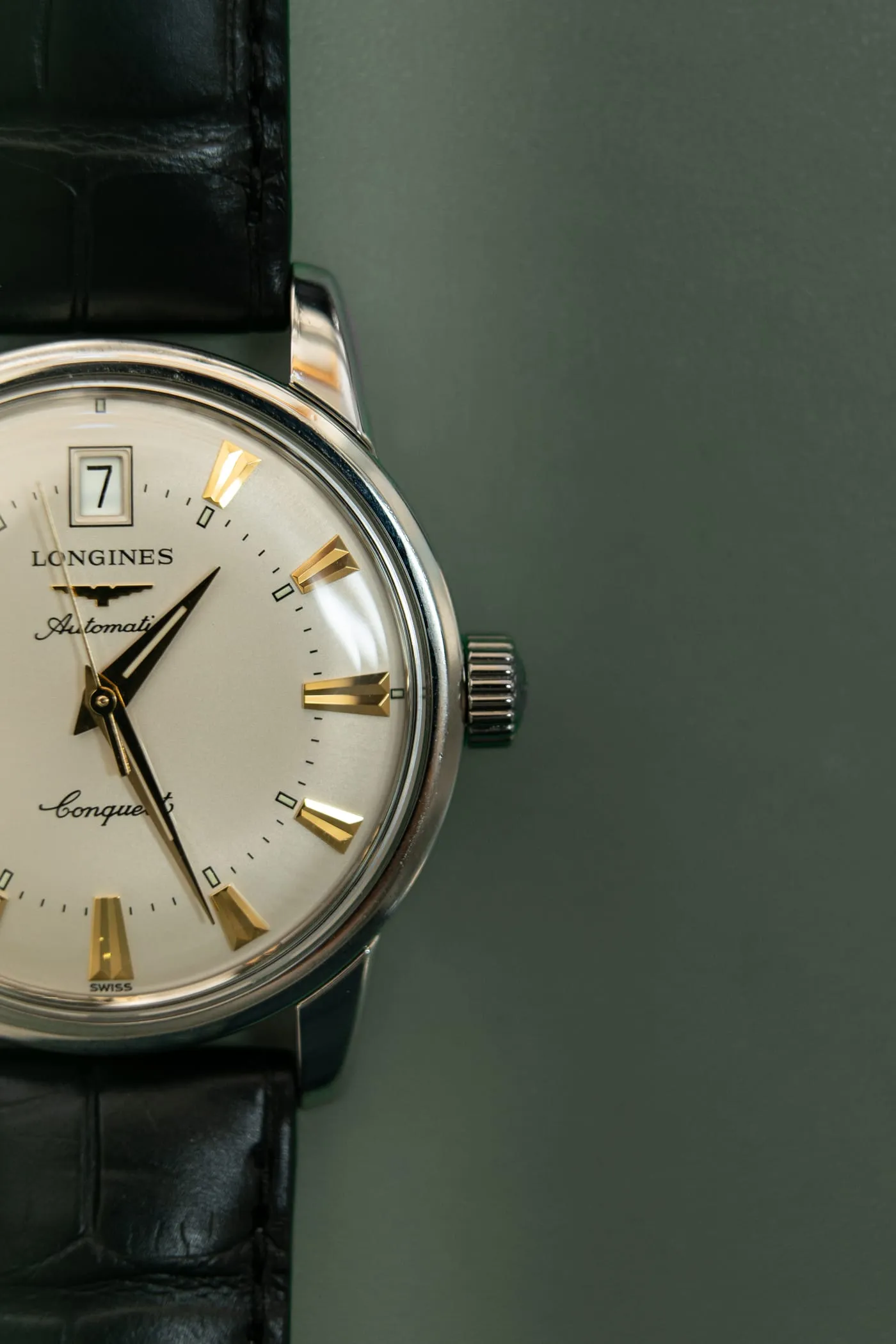
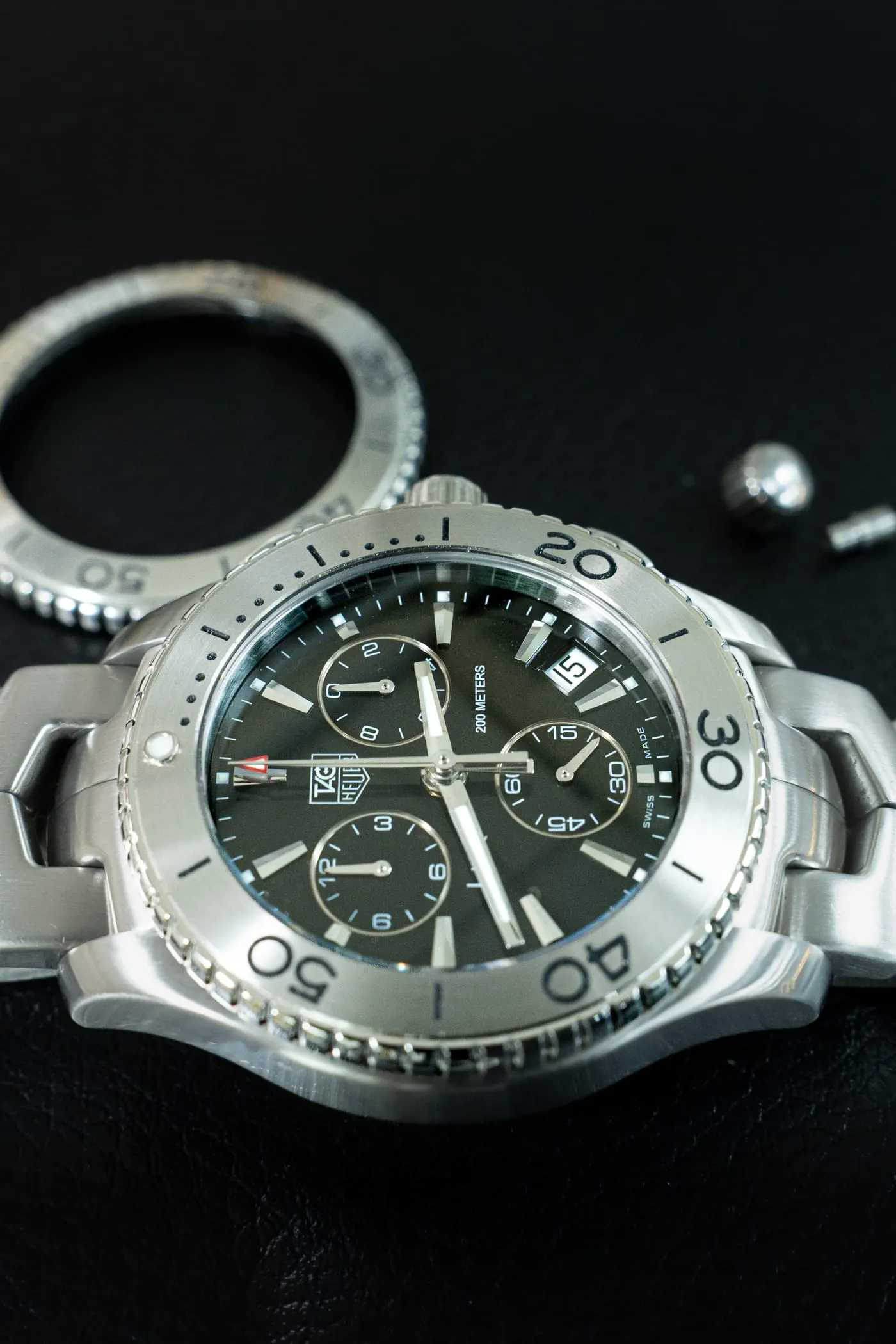
Workshops directly accredited by the manufacturer to perform service on their behalf, using genuine parts to the brand’s protocol. SwissMade operates as an Official UK Service Centre for ten Swiss brands; Omega, TAG Heuer, Cartier, Baume & Mercier, Longines, Tissot, Hamilton, Certina, Ebel and Fortis.
For these brands, you get manufacturer-standard work, genuine parts, and a 2-year warranty, with an eight-to-twelve-week turnaround instead of twenty-plus.
Route 3: A specialist independent watchmaker.
For brands where direct accreditation isn’t on offer to independents (Rolex being the obvious example), a reputable specialist with manufacturer training does the same work to the same standard, with access to genuine parts where available.
The trade-off is no formal manufacturer relationship but for older watches, faster turnaround, and lower pricing, this is often the right choice. We explore the trade-offs in detail in Rolex servicing: official vs independent.
A good rule of thumb: if your watch is still under manufacturer warranty, Route 1 protects that warranty unconditionally. If it’s out of warranty and the brand has an accredited UK partner, Route 2 gives you the same standard with much faster turnaround. If it’s older, Route 3 is often the only practical option.
The Six Questions to Ask Before You Commit
Whichever route you take, the same six questions tell you almost everything you need to know about a specific workshop.
1. Are you accredited by the manufacturer for this brand, and at what level?
A vague “we work on all brands” is not the same as named accreditation. Listen for a specific tier for example, “Omega Level 3” (the highest tier) or “Cartier accredited service centre”. The accreditation should be verifiable, the brands publish authorised service partner lists themselves.
2. Will my watch be serviced on these premises, by your watchmakers?
A startling number of London “watch repair” addresses are drop-off agents who courier watches elsewhere; sometimes to Switzerland, sometimes to a Birmingham workshop, sometimes to an outsourced contractor. The work may still be competent, but you lose the local turnaround advantage you came for. Ask directly.
3. Do you use genuine manufacturer parts?
The honest answer is either “yes, always” or “yes for current brands, and we’ll tell you if a vintage part isn’t available”. Anything more equivocal than that means aftermarket parts are part of the workflow, which will affect resale and may void manufacturer warranty.
4. What warranty do you offer on the service?
The serious workshops offer 12 months minimum on full services. The very best offer 24 months. A 90-day or 6-month warranty is a signal either the workshop isn’t confident in the work, or they’re aware of high failure rates.
5. Can I see a written estimate before any work begins, and is it free?
A reputable workshop will inspect the movement, write up an itemised estimate, and only charge you if you decline the work and the watch is significantly older than the brand still supports. Many workshops (including ours) charge nothing at all for the estimate, regardless of whether you proceed.
6. What is the realistic turnaround?
For a full mechanical service, eight to twelve weeks is the honest answer for an in-house specialist. A workshop offering one-day or one-week full service either isn’t doing a full service (they’re doing basic maintenance and calling it more), or they’re skipping protocol steps. Battery changes and basic maintenance can legitimately be same-day or same-week.
Six Red Flags to Walk Away From
Some signals tell you to leave before you hand the watch over.
Reluctance to give a written estimate. Verbal estimates are a problem. The number creeps once your watch is on the bench.
No certifications visible or claimed. Reputable workshops display their manufacturer accreditations, BHI (British Horological Institute) membership, or WOSTEP qualifications somewhere; on the website, in the workshop, in the paperwork. Their absence is a signal.
Pricing significantly below the market. A full Omega service that costs £150 isn’t a deal, it’s a sign the work isn’t being done. Genuine parts alone for many Omega services exceed that figure at trade pricing. Cheap means corners.
A drop-off counter with no visible workshop. Some addresses are pure front-of-house operations. If there’s no bench, no watchmakers, and no movement work visible on the premises, the work is happening elsewhere.
Same-day turnaround on a full mechanical service. Mechanical full services involve disassembly, ultrasonic cleaning, component inspection, lubrication, reassembly, timing regulation across positions, and pressure testing. The work cannot be compressed into a day. Same-day battery change, yes; same-day movement service, no.
Pressure to commit before the inspection. Any workshop quoting a final price without first opening the watch and inspecting the movement is either guessing or planning to add charges later. Real pricing comes after diagnostic.
How to Sanity-Check a Specialist Before Sending Your Watch
Once you have a shortlist of two or three, a few minutes of due diligence separates the genuine from the marketing-led:
Check the manufacturer’s authorised service partner list. Major brands publish theirs: Omega, Cartier, TAG Heuer, Longines, Tissot and others list their UK accredited partners on the brand websites. If a workshop claims accreditation that isn’t on the brand list, ask why.
Look at Google reviews but read them, don’t count them. A 4.9-star average from twelve reviews tells you less than a 4.6-star average from eight hundred. Read the body of the reviews: are they about timekeeping after service? Communication? Or are they thin praise? Substantive critical reviews and the workshop’s responses to them tell you more than star ratings ever will.
Check Companies House. A workshop’s filing history reveals how long it’s actually traded, whether it’s a single trader or part of a larger group, and any director changes. Five years of consecutive accounts under one director is a reassuring signal.
Ask for a reference brand. A genuine accredited workshop will tell you which insurance valuers, jewellers or auction houses they work with. Names like Watches of Switzerland, Goldsmiths, Mappin & Webb or H. Samuel all of whom outsource certain repair work to trusted partners - are reassuring trade signals.
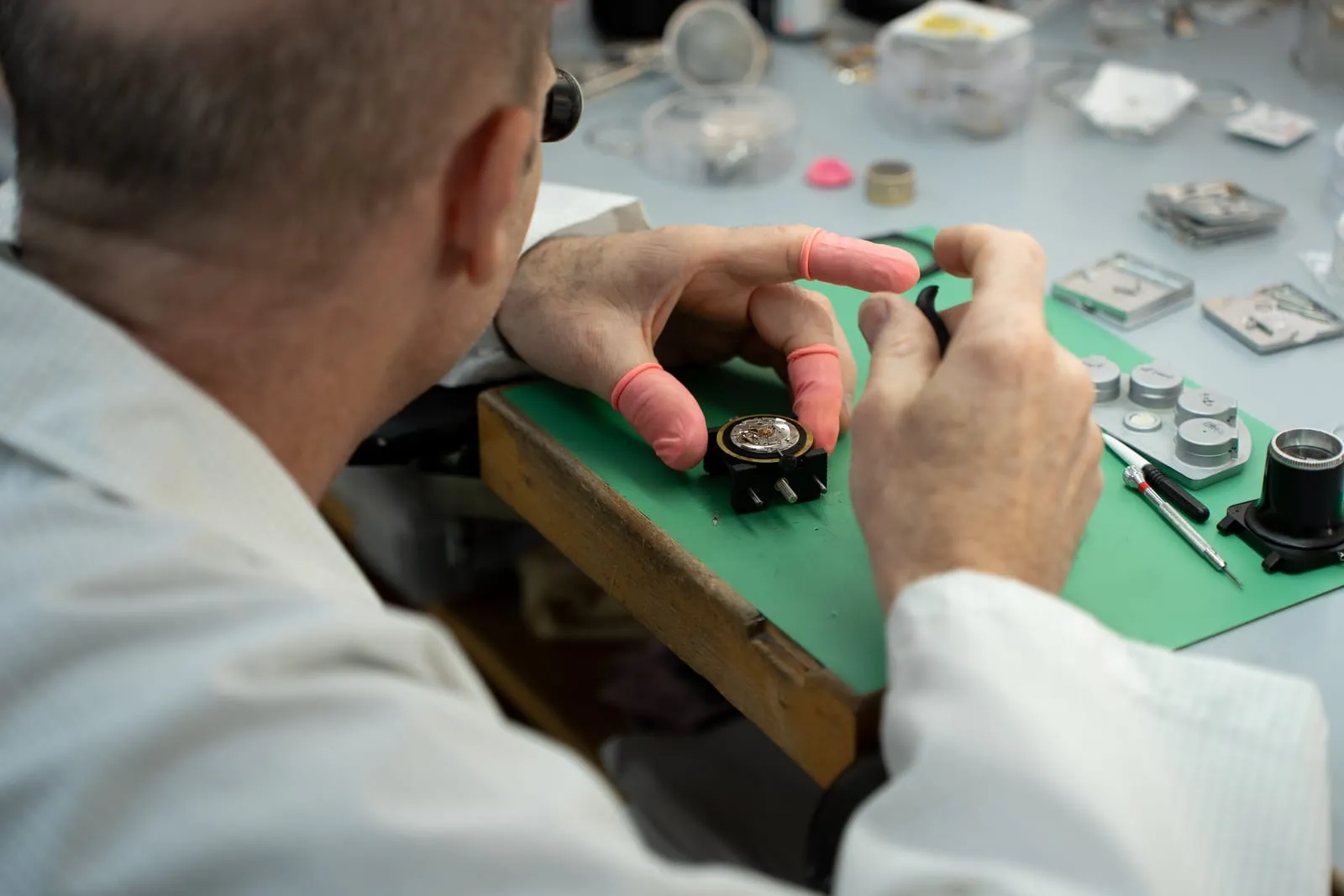
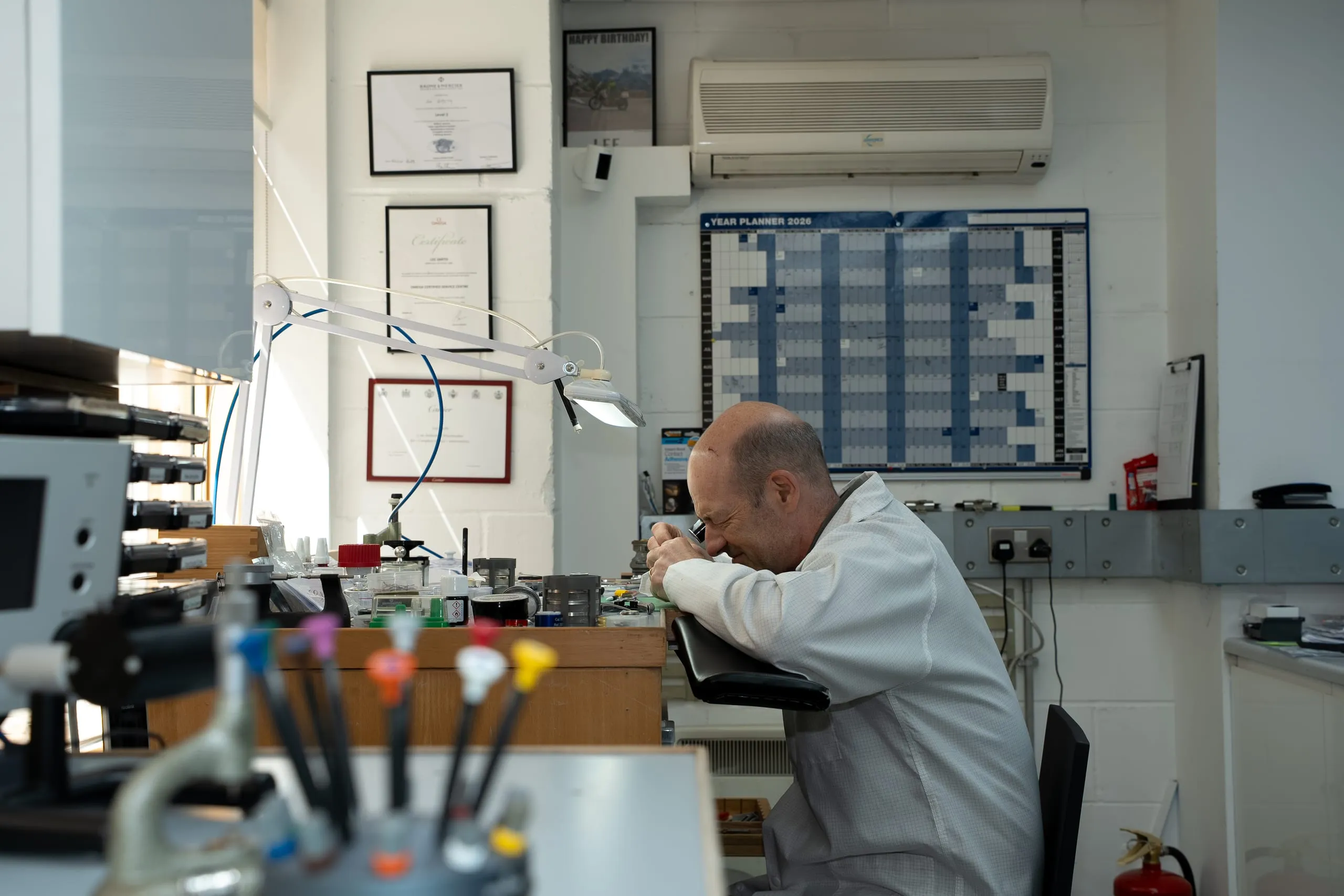
Walk in unannounced if you can. A working watchmakers’ workshop looks like one. Benches, loupes, presses, movement holders, parts trays. If the address is just a counter and a polite person, the actual work is happening somewhere else.
What “Luxury Watch Repair in London” Actually Costs
Pricing varies enormously, and the variation usually tells you which route the workshop is offering. As a 2026 benchmark:
| Service | Manufacturer direct | Accredited specialist | Independent specialist |
|---|---|---|---|
| Battery replacement (luxury quartz) | £80-£150 | £45-£90 | £30-£60 |
| Basic maintenance (mechanical) | £250-£500 | £180-£300 | £150-£250 |
| Full service: three-hand automatic | £500-£900 | £350-£600 | £250-£450 |
| Full service: Rolex (steel sports) | £700-£900 | n/a (no independents accredited) | £440-£700 |
| Full service: Omega chronograph | £900-£1,400 | £650-£950 | £450-£750 |
| Vintage full restoration | £1,200-£3,500 | £700-£2,000 | £500-£1,500 |
The cheapest column isn’t necessarily a deal, at the bottom end of the independent column, you’re often outside the genuine-parts ecosystem. The expensive column buys manufacturer-perfect work but at the cost of months of waiting.
For detailed brand-specific pricing, see our guides to Rolex service cost in the UK and Omega service cost in the UK.
Where SwissMade Fits: Honest Comparison
Since this article comes from us, here’s the unflattering version of where we fit and where we don’t.
We’re an Official UK Service Centre (Route 2, in the framework above) for ten Swatch Group and Richemont brands: Omega, TAG Heuer, Cartier, Baume & Mercier, Longines, Tissot, Hamilton, Certina, Ebel and Fortis.
For these brands, we offer manufacturer-standard work, genuine parts, a 2-year warranty (double industry standard), and typically an eight-to-twelve-week turnaround against twenty-plus weeks brand-direct.
Pricing sits 20-30% below brand-direct for equivalent work. For these brands, we’d argue we’re a credible choice for most owners. You can see the full list on our brands page.
For Rolex, we’re Route 3: an independent specialist. We can service watches that Rolex’s own service centres often decline (anything over around 35 years old falls into our wheelhouse), and we work faster and at lower cost. We don’t have a Rolex accreditation, because Rolex doesn’t grant them to independents. If you have a current-model Rolex under warranty, Route 1 is the right call. If you have an out-of-warranty or vintage Rolex, we’d compete with anyone.
We’re not the right choice for Patek Philippe, Audemars Piguet, A. Lange & Söhne, or Richard Mille at the high-complication end: those manufacturers run their own service networks for good reason, and we’d refer you to them or to specialists who focus solely on those brands.
If you’d like to see how the process works in practice, we’ve written a step-by-step walkthrough at how it works. Or, for the heritage context behind our Hatton Garden workshop, see our guide to Hatton Garden watch repair.
We’re at swissmade.co.uk, or 020 7405 8504.
Frequently Asked Questions
How much should a luxury watch repair cost in London?
For a full service on a mid-tier mechanical watch (Omega, TAG Heuer, Longines), expect £350–£600 from an accredited specialist and £500–£900 from the manufacturer direct. Rolex full services start around £440 through an independent specialist and £700+ through Rolex’s own service centres. Chronographs and annual calendars cost more; vintage restoration involving dial or case work runs into the low thousands. Cheaper than that and you’re outside the genuine-parts ecosystem.
How do I know if a London watchmaker is trustworthy?
Three signals matter more than online reviews alone: verifiable manufacturer accreditation (cross-check on the brand’s website), how long they’ve traded from the address (look up Companies House filings), and whether the watch is serviced on the premises. A genuine specialist will answer all three questions without hesitation and will encourage you to verify.
Should I send my watch to the manufacturer or an independent specialist?
Under warranty, send it to the manufacturer - the warranty protection is unconditional. Out of warranty, an accredited independent specialist usually offers the same quality of work, faster turnaround, and 20–30% lower pricing. For vintage watches that the manufacturer’s service centre may decline, a reputable specialist is often the only practical option.
Will Rolex service a 40-year-old watch?
Rolex’s own service centres frequently decline watches over around 35 years old, citing parts availability. This is one of the strongest reasons to use an independent Rolex specialist, they keep relationships with vintage parts suppliers, have movement-work experience on calibres Rolex no longer trains for, and will accept watches that the brand declines.
What’s the typical turnaround for a full luxury watch service in London?
Eight to twelve weeks from an independent or accredited specialist. Twenty to thirty weeks from the brand direct, sometimes longer for complications. Battery replacements are usually same-day. Vintage restoration involving dial work, case refinishing, or hard-to-source parts can take ten to fourteen weeks. Any workshop quoting same-day turnaround on a full mechanical service isn’t doing a full service.
What questions should I ask before handing my watch over?
Six: (1) Are you manufacturer-accredited for this brand? (2) Will the work be done on these premises? (3) Do you use genuine parts only? (4) What warranty do you offer? (5) Is the estimate free, and will it be in writing? (6) What’s the realistic turnaround? If any answer is vague, ask follow-ups. A genuine specialist welcomes the questions.
Ready to talk to us about your watch?
If you’d like to start a service, repair or restoration with SwissMade (or just want an honest second opinion on whether the work is needed) you can begin online or by phone.
Free insured postage is included nationwide for owners who can’t visit our workshop in person.
Start your repair | Call 020 7405 8504